Listening Beneath the Making
Listening Beneath the Making…
There is an innate knowing our bodies crave.
It lives in the colors we choose without explanation. In the textures we feel beneath our fingers. In the scent that brings us back to a place we didn’t realize we missed. In the movement of our hands when all ten fingers are involved. In our ability, even briefly, to dim the noise and simply be.
The questions we are taught to ask are usually analytical and strategic. This approach serves many areas of life well. But when we need to touch the nerve, when we are stretched into discomfort, uncertainty, or a quiet questioning of our own safety, it often falls short.
That’s where awareness enters.
Not as a solution, but as a moment of noticing and accepting what you have always known.
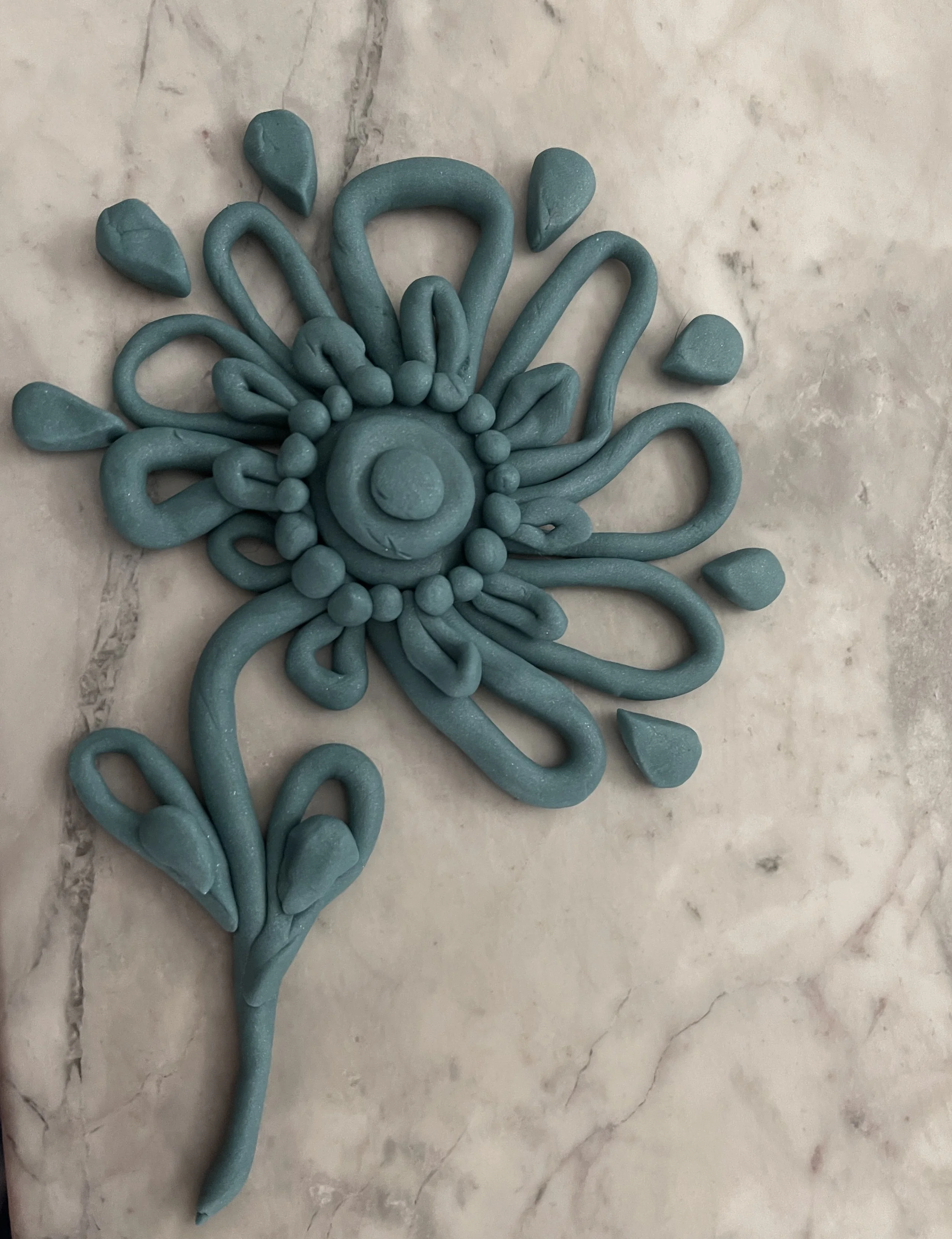
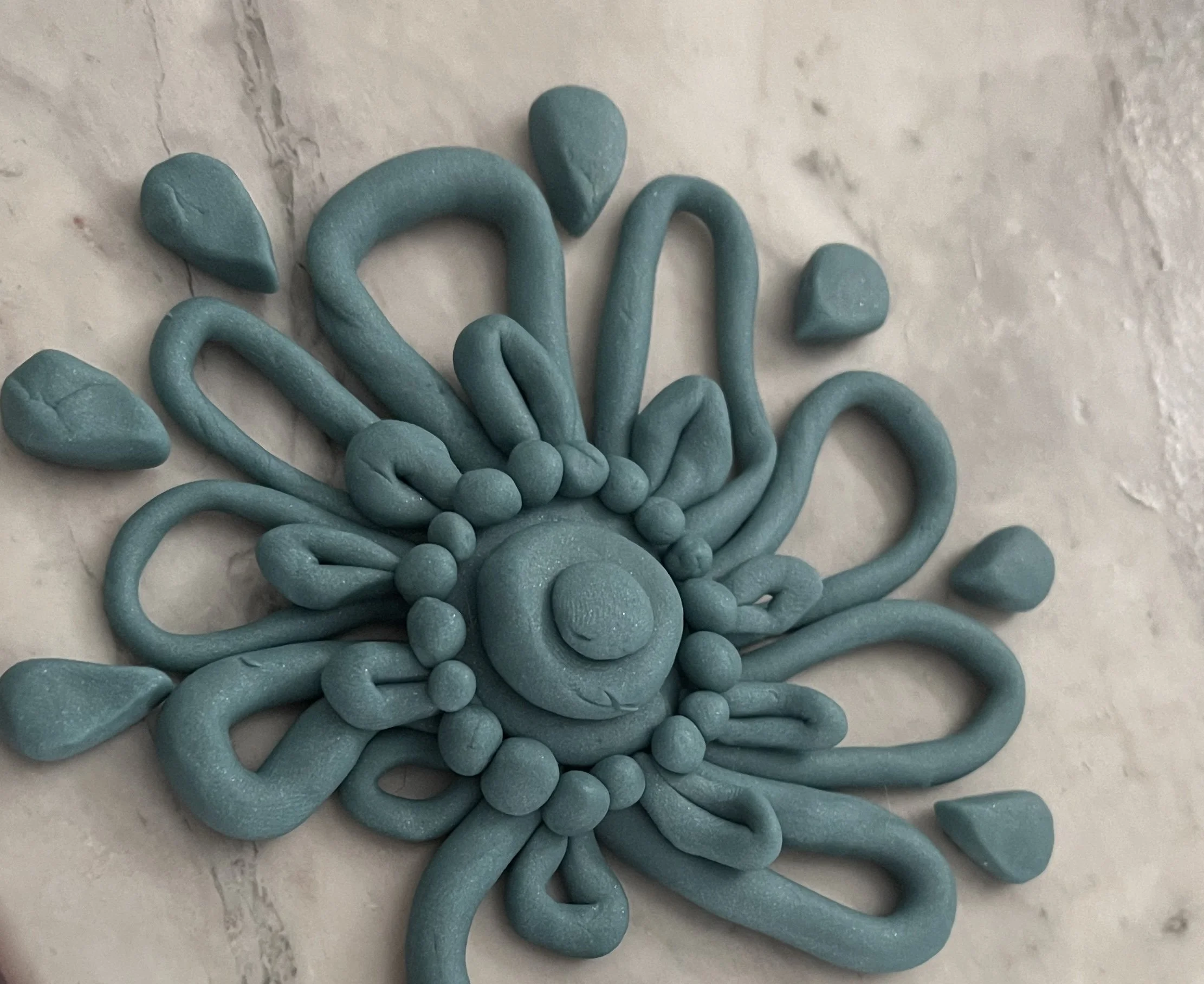
This image came from spontaneous creation. No plan. No agenda. Just presence, material, and response. What unfolds on the surface is only part of the experience. Beneath it, the nervous system is listening, responding, regulating. It recognizes rhythm, repetition, softness, pressure, color. These elements speak a language older than thought.
That language is sensory.
When we create this way, without deciding what something should become, we invite ourselves out of urgency and into sensation. The body begins to settle. The mind loosens its grip. Attention shifts from performance to experience.
I was reminded of this deeply when I sat at the kitchen counter with my son.
He had combined six colors of Play-Doh the day before, enthusiastically smooshed together into a single hue. I made it a point to be fully present, to observe his creations with genuine awe. His creativity flowed freely, effortlessly, unfiltered. The kid has laser focus when he’s working.
He was crafting a set of tools. Accurately, I might add.
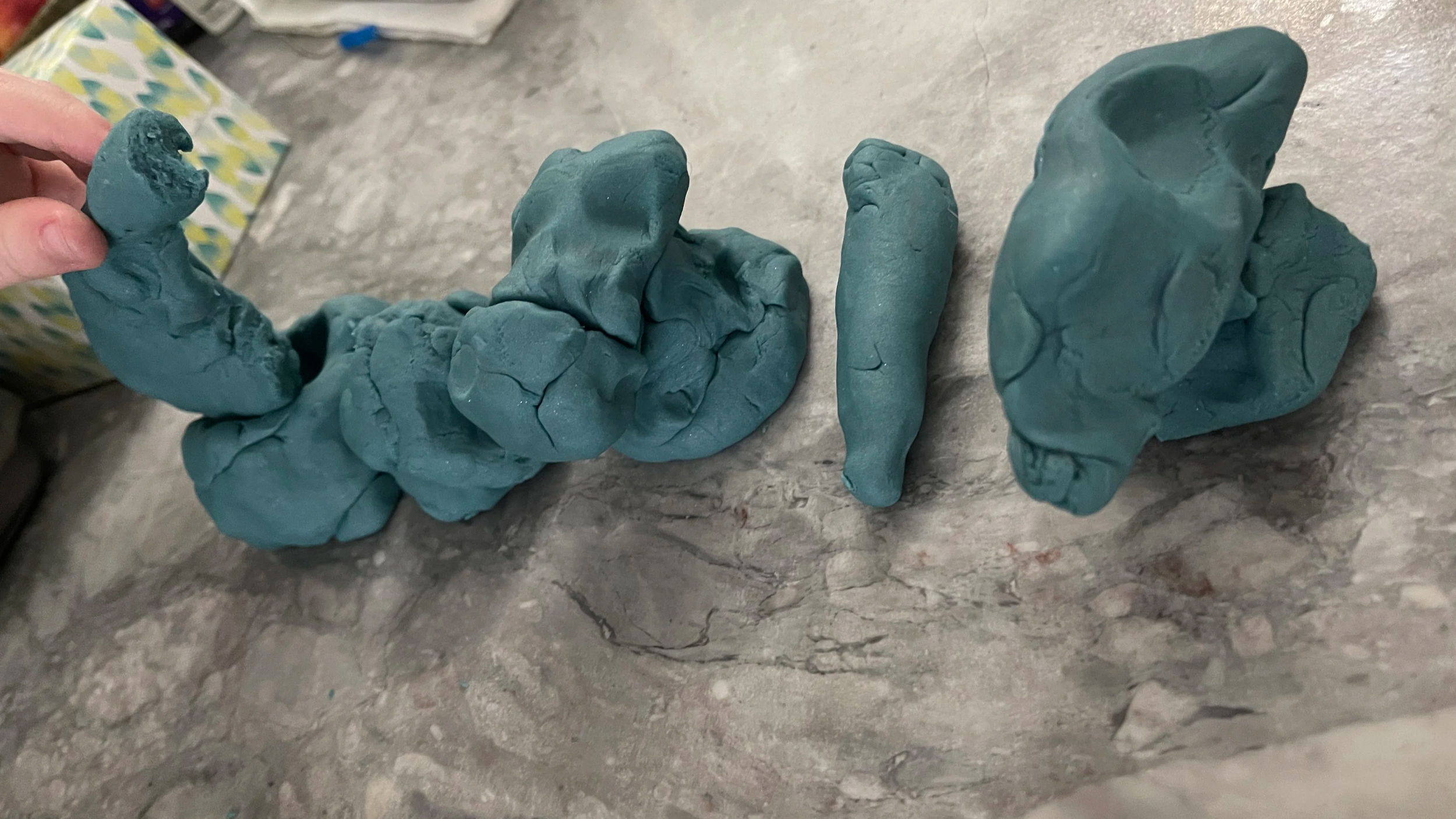
A paintbrush and paint bucket. A hammer. A screwdriver. A drill.
His eyes were lit with determination, not to get the look or composition just right, but from a pure commitment to feeling what he was making. He was in awe of what he created. It was a beautiful smile of accomplishment, wrapped in the joy of simply creating.
No agenda to perform. Just the act of making.
We sat side by side for a while. We made spheres of all sizes. When he noticed me shaping a teardrop, he became curious and asked how I did it. He watched, learned, and executed it beautifully himself.
What mattered most wasn’t the shapes, but how we were there together.
Awareness. Tension. Worry. Doubt. Presence.
I’ll be honest. I’ve often been physically present while my thoughts are somewhere else. Today was different. I brought my whole self to the moment. I reminded my mind and body to stay together. To experience, not observe from a distance.
The takeaway for me is recall.
When I can remember a moment with ease, I know I was fully immersed. I can recall his smile, the light in his face, the pride he felt, the simple act of making spheres, coils, and teardrops. These details stay with me because I was there for all of it.
Many would label this kind of presence as easy.
In reality, most of us are only half-experiencing our lives. We skim the surface, rarely reaching the deeper state of awareness that involves the whole being.
This is why moments of spontaneous creation matter. They return us to sensation. They teach us how to stay. They remind us that regulation, clarity, and calm do not always come from thinking harder, but from listening more closely.
When we allow ourselves to slow down in this way, something begins to reorganize quietly in the background. The nervous system recognizes safety. The body exhales. Memory roots itself more deeply. We begin to feel again rather than hover above our lives.
This is the work I continue to return to, both personally and in shared spaces of guided presence. Not as a method to master, but as a practice of remembering. A way of meeting ourselves where we already are, without performance or pressure.
If this reflection stirred something in you, let it linger. Let it move at its own pace. Awareness doesn’t need to be chased. It arrives naturally when we make room for it.
And sometimes, simply staying with what you felt while reading is enough to begin.